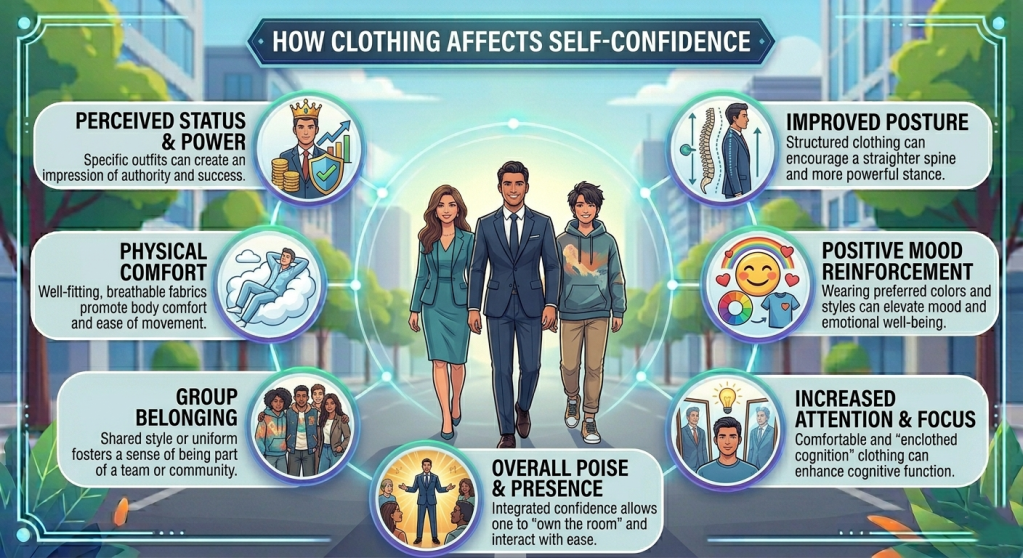
You know the feeling. You put on the right outfit, glance in the mirror, and something shifts. Your shoulders sit a little straighter. You walk a little taller. The day suddenly feels more manageable.
That’s not vanity. That’s a real psychological response, and researchers actually have a name for it: enclothed cognition.
What you wear changes how you think, feel, and behave, often without you even realizing it. And building that kind of wardrobe doesn’t require a big budget. Sometimes all it takes is spotting a genuine yard of deal on the right piece at the right time.
Let’s look at exactly how clothing affects self-confidence and how to use that connection to your advantage.
The Psychology Behind Clothing and Confidence
Clothing isn’t just a visual choice. It interacts directly with how your brain processes identity, mood, and self-perception.
This connection is well documented in psychology, even if most people experience it without ever thinking about the science behind it.
Understanding this link helps explain why certain outfits make you feel powerful, while others leave you feeling small or self-conscious.
What Is Enclothed Cognition
Enclothed cognition is the psychological concept that clothing affects the wearer’s thoughts, behavior, and even performance. Studies have shown that people perform differently on tasks depending on what they believe their clothing represents.
In simple terms, wearing clothes you associate with competence or confidence can actually make you feel and act more competent and confident.
This is why your favorite “power outfit” genuinely does change how you show up, not just how you look.
How Clothing Directly Impacts Self-Confidence
Here’s where this becomes practical. These are the specific ways clothing choices shape confidence on a daily basis.
1. Fit Changes How You Carry Yourself
Ill-fitting clothes constantly demand attention. Pulling at a waistband, adjusting a sleeve, or tugging at a hem pulls focus away from confidence and onto discomfort.
Well-fitted clothing, on the other hand, lets you move naturally without constant adjustment. This alone improves posture and presence throughout the day.
Confidence often starts with simply forgetting about your clothes because they fit so well.
2. Color Choices Influence Mood
Certain colors are linked to specific emotional responses. Bold colors like red can create a sense of boldness or energy, while softer tones often promote calm.
Choosing colors intentionally, based on how you want to feel that day, can shift your mood before you even leave the house.
This is a simple, often overlooked way clothing directly affects emotional state.
Why Color Psychology Matters in Daily Dressing
Color psychology isn’t about strict rules. It’s about noticing patterns in how certain shades make you personally feel, then using that awareness intentionally when choosing outfits.
3. Comfort Reduces Mental Distraction
Physical discomfort creates mental distraction. Scratchy fabric, tight shoes, or clothing that doesn’t breathe properly pulls attention away from confidence and toward irritation.
Comfortable clothing removes this distraction entirely, freeing up mental space for actual confidence to show through.
This is especially noticeable during long days, important meetings, or social events where comfort directly impacts performance.
4. Clothing Sets Context and Expectation
Wearing clothing appropriate for a specific situation, whether that’s a job interview, a first date, or a casual gathering, helps set the right mental context.
Dressing appropriately reduces anxiety about fitting in or standing out for the wrong reasons, allowing confidence to take over instead.
This connects directly to enclothed cognition, where context-appropriate clothing reinforces the right mindset for the situation.
5. Personal Style Reinforces Identity
Wearing clothes that genuinely reflect your personality strengthens your sense of identity. This alignment between inner self and outer appearance often translates directly into confidence.
When clothing feels authentic rather than forced, confidence becomes a natural byproduct rather than something you have to manufacture.
6. Quality Clothing Improves Self-Image
Wearing well-made, quality clothing often improves how people perceive themselves, even subconsciously. Worn-out, faded, or poorly constructed clothing can quietly chip away at self-image over time.
This is part of why catching a genuine yard of deal on a quality piece matters so much. It allows access to better self-image-boosting clothing without requiring a large financial investment.
7. Clothing Choices Affect Social Confidence
What you wear influences how comfortable you feel in social situations. Feeling underdressed or overdressed in a particular setting can create unnecessary social anxiety.
Choosing clothing that matches social expectations, while still reflecting personal style, supports smoother, more confident social interactions.
8. Repetition Builds Confidence Through Familiarity
Wearing a “go-to” outfit repeatedly, one that consistently makes you feel good, builds confidence through familiarity and predictability.
This is why many highly successful people simplify their wardrobe choices, reducing decision fatigue while relying on outfits they already know work well for them.
9. Clothing Can Mask or Reveal Insecurities
Strategic clothing choices can help individuals feel more confident by addressing specific insecurities, whether that’s fit, coverage, or silhouette.
This isn’t about hiding who you are. It’s about choosing clothing that genuinely makes you feel comfortable and confident in your own body.
10. Confidence Builds Through Positive Feedback Loops
When clothing choices receive positive feedback, whether through compliments or simply feeling good in the mirror, this reinforces future confident choices.
Over time, this creates a positive feedback loop where confident dressing leads to confident behavior, which often leads to more positive social reinforcement.
Building a Confidence-Boosting Wardrobe Without Overspending
You don’t need an expensive wardrobe to experience these psychological benefits. Here’s how to build one thoughtfully.
- Prioritize fit above all else. Even simple, inexpensive clothing looks and feels better when properly fitted.
- Identify your confidence colors. Notice which colors consistently make you feel good, then build around those choices.
- Don’t ignore comfort. Confidence and comfort go hand in hand, regardless of how stylish an item appears.
- Watch for smart discounts. Catching a real yard of deal on quality basics lets you build a confidence-boosting wardrobe without financial strain.
- Repeat what works. Don’t hesitate to rely on outfits that consistently make you feel confident, even if you wear them often.
Avoiding Confidence Pitfalls
Avoid buying clothing purely based on trends or external pressure, ignoring personal comfort or fit. This often backfires, creating self-consciousness rather than confidence.
Similarly, avoid holding onto worn-out or ill-fitting clothing simply out of habit. Refreshing key pieces, even through budget-friendly options, supports better long-term self-image.
Conclusion
Clothing affects self-confidence far more than most people realize. Fit, color, comfort, and personal style all play a measurable role in how confident you feel throughout the day.
This connection isn’t superficial. It’s rooted in genuine psychological responses tied directly to how you perceive yourself based on what you’re wearing.
Building a confidence-supporting wardrobe doesn’t require excessive spending. Paying attention to fit, prioritizing comfort, and occasionally taking advantage of a legitimate yard of deal on quality pieces goes a long way.
Next time you’re getting dressed, pay attention to how different choices make you feel. That awareness alone can become a powerful tool for building lasting confidence.
FAQs
1. Is the connection between clothing and confidence backed by actual research? Yes. The concept of enclothed cognition, studied by psychologists, demonstrates that clothing genuinely affects thoughts, behavior, and self-perception.
2. Can wearing the same outfit repeatedly still boost confidence? Absolutely. Familiarity with a reliable, comfortable outfit often strengthens confidence rather than diminishing it, since you already know it works well for you.
3. Does expensive clothing automatically lead to more confidence? Not necessarily. Fit, comfort, and personal style matter far more than price. A well-chosen, affordable piece, even one found through a smart yard of deal, can boost confidence just as effectively.
4. How does color affect confidence specifically? Different colors are associated with different emotional responses. Choosing colors intentionally based on personal mood preferences can directly influence how confident you feel.
5. What’s the simplest way to start building confidence through clothing? Start by prioritizing fit and comfort over trends. Identify a few reliable pieces that consistently make you feel good, then build your wardrobe gradually around those choices.

 yardofdealpoetry